1 The professor who lost to chimpanzees
Hans Rosling presses play
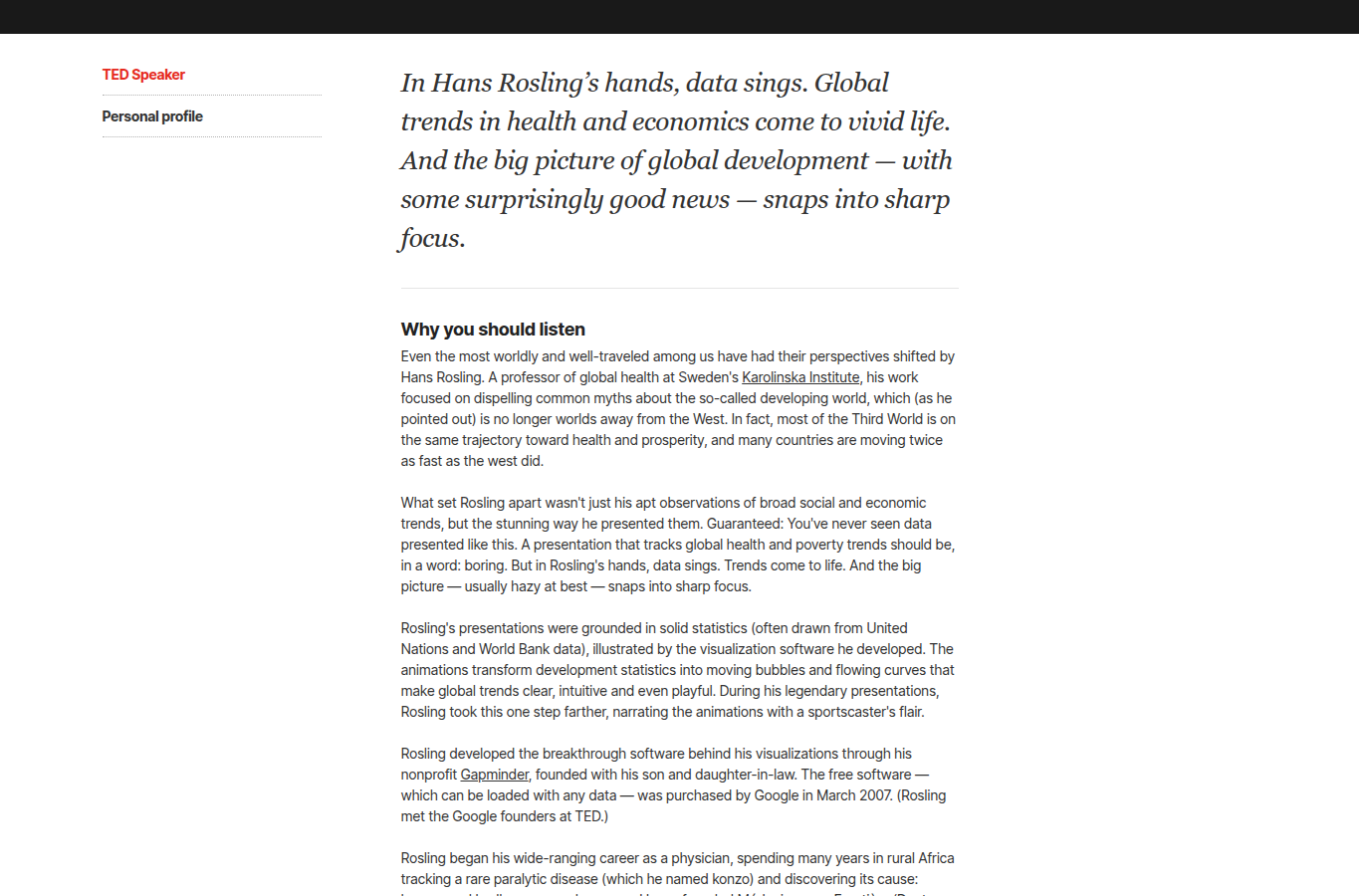
Gapminder · Hans Rosling, TED 2006 onward · 200 Years That Changed the World
The setup. The data had existed for decades: every country's income and life expectancy, year after year, sitting in UN tables. Accurate, complete, and felt by no one. Educated audiences believed the world split neatly into "the West" and everyone else.
The provocation. Rosling opened by giving his audience a quiz about global health — and announced that chimpanzees picking answers at random would beat them. They did. The room's mental map of the world was simply wrong, and now they knew it.
The turn. He turned each country into a bubble — income across, lifespan up, population as size — and pressed play. Two hundred years streamed past in a few seconds. The poor, short-lived cluster crawled up and to the right, chasing the rich one. He called it like a sportscaster: "Here comes China… watch South Korea move."
Why it worked. Motion let people feel change instead of inferring it. The bubbles became characters with trajectories. And because he started from the misconception he meant to destroy, the data didn't just inform — it overturned a belief in real time.
Start from the belief you intend to break, give every data point a body, and animate the change so the audience watches it happen rather than reads that it did.